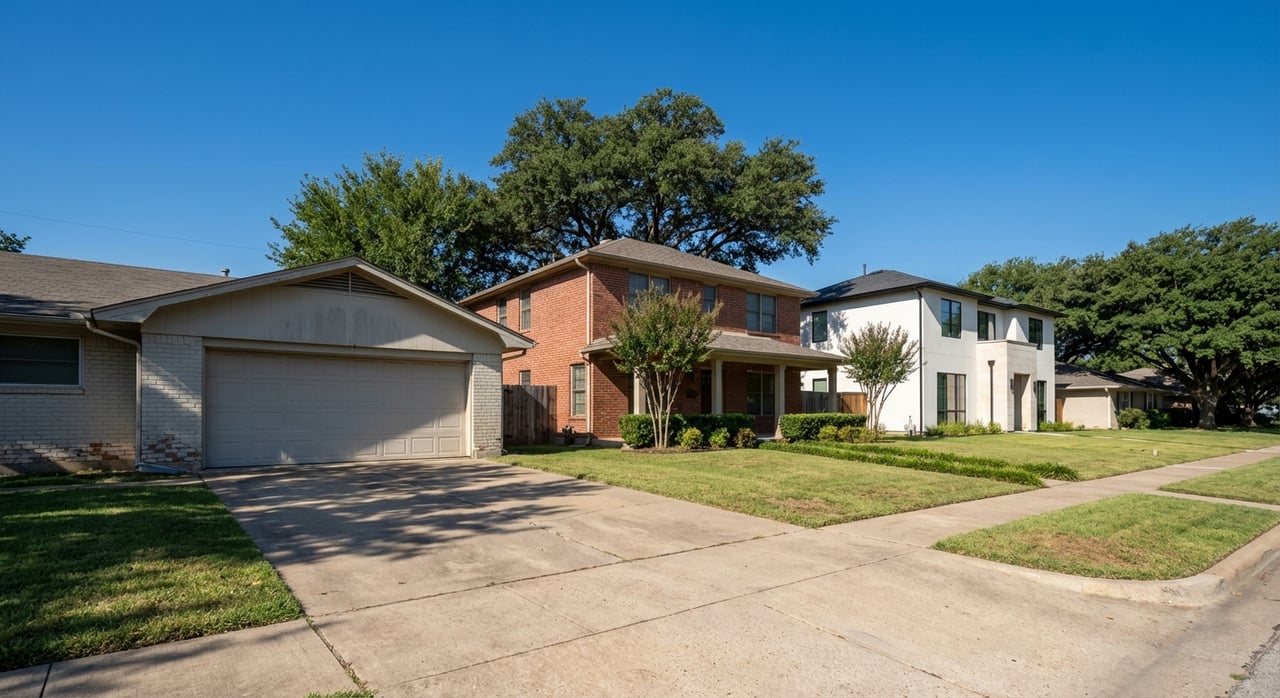
Thinking about buying a rental in Collin County but not sure how to judge one neighborhood versus another? You are not alone. With fast growth across Plano, Frisco, Allen and nearby suburbs, it can be hard to separate a solid long-term hold from a so-so return. In this guide, you will get a clear checklist, local examples, and simple math you can run in minutes to screen any neighborhood for rental potential. Let’s dive in.
Why rental demand looks strong in Collin County
Collin County is one of the Dallas–Fort Worth metro’s growth engines. The U.S. Census estimates about 1.25 million residents in 2024, and county figures point to home values and rents that sit above national medians. You can use those county-level anchors to sanity-check any neighborhood-level comps you pull. See the latest county snapshot on Census QuickFacts for population and housing context. Explore Collin County QuickFacts.
At the same time, the DFW region has seen a wave of new apartment buildings delivered in 2023 through 2025. Several market reports cite professionally managed multifamily vacancy in the low double digits during 2024–2025. That pressure can mean more concessions for renters in large apartment communities, while single-family rentals in fast-growth suburbs may still lease quickly. For perspective on the apartment supply story and vacancy trends, review this DFW update that summarizes vendor data. Read the DFW market context.
For national background, U.S. Census vacancy measures were near 6 to 7 percent in late 2024. Keep in mind that vendor indices track different universes, such as only professionally managed apartments. Always match your data source to the housing type you are underwriting. See national vacancy context.
The core metrics that keep you disciplined
These are the simple, repeatable numbers you can use to compare neighborhoods in minutes.
Rent-to-price ratio (gross yield)
- Formula: monthly rent × 12 ÷ purchase price.
- Quick screen: the informal 1 percent rule asks whether monthly rent is roughly 1 percent of price. In higher-price suburbs, that standard is rare. You can still make deals work with realistic expenses, taxes, and long-term growth assumptions.
Gross Rent Multiplier (GRM)
- Formula: purchase price ÷ annual gross rent.
- How to use: a lower GRM means a faster payback of price from gross rent. Use GRM to compare neighborhoods or zip codes at a glance.
Net Operating Income (NOI) and cap rate
- NOI = annual gross rent minus vacancy allowance minus operating expenses (management, maintenance, insurance, property taxes, utilities you pay, reserves, HOA if any).
- Cap rate = NOI ÷ purchase price. Compare this to yields available in other property types or markets.
- Texas note: property taxes are a big expense driver. Check exact city, county, and school district rates through the Collin County Appraisal District and include them in your pro forma.
Vacancy allowance and concessions
- Pick a local vacancy estimate that fits the property type. Elevated vacancy in newly delivered apartments may not match single-family rental experience in family-oriented suburbs. Underwrite the specific submarket and unit type.
MLS and market context
- Days on Market (DOM), sale-to-list ratio, and months of supply help you read buyer leverage. Longer DOM with flat to down prices often signals better buy-side terms.
Work a real example: Plano in 5 minutes
Use these dated snapshots to see how the math works. You can swap in your own comps later.
- Asking rent (Zillow rental index, Feb 2026): about $2,500 in Plano.
- Median sale price (Redfin market snapshot, Jan 2026): about $473,000.
Now run the numbers:
- Annual gross rent = $2,500 × 12 = $30,000.
- Rent-to-price (gross yield) = $30,000 ÷ $473,000 = 6.3 percent.
- GRM = $473,000 ÷ $30,000 ≈ 15.8.
Interpretation: The 1 percent rule is not met here since $2,500 is about 0.53 percent of $473,000. If you are interested in Plano, your success depends on accurate expenses, taxes, and a view on rent growth or appreciation.
Turn gross yield into a cap rate
Here is a simple way to move from gross rent to a cap rate. Adjust the assumptions to match your target property.
- Step 1: Pick a vacancy and loss allowance. For a stable suburban single-family rental, a 5 to 8 percent allowance can be a reasonable starting point. Raise it if you expect concessions.
- Step 2: Estimate operating expenses. Include management, maintenance, insurance, property taxes, HOA, utilities you cover, and reserves. Small single-family portfolios often use 30 to 50 percent of gross rent for a first-pass estimate.
- Step 3: Calculate NOI and cap rate. Using the Plano example with $30,000 gross rent:
- If vacancy plus expenses total 40 percent, NOI = $30,000 × 0.60 = $18,000, so cap rate = $18,000 ÷ $473,000 ≈ 3.8 percent.
- If they total 50 percent, NOI = $30,000 × 0.50 = $15,000, so cap rate ≈ 3.2 percent.
This shows how sensitive cap rate is to taxes, insurance, and maintenance. Always price taxes from the specific address and school district to avoid surprises.
Compare Plano, Frisco, and Allen at a glance
Use these dated snapshots to guide your first pass. Then replace them with your own bedroom-specific comps.
- Plano (Feb 2026 rents, Jan 2026 prices): asking rent about $2,500; median sale price about $473,000. Gross yield ≈ 6.3 percent. GRM ≈ 15.8.
- Frisco (Feb 2026 rents, Jan 2026 prices): asking rent about $2,995; median sale price about $625,000. Gross yield ≈ 5.75 percent. GRM ≈ 17.4. Interpretation: higher absolute rents, but prices are higher still, so gross yields are modest. Focus on exact micro-neighborhood comps by bedroom and lot size.
- Allen (Feb 2026 rents, Jan 2026 prices): asking rent about $2,600; median sale price about $468,735. Gross yield ≈ 6.66 percent. GRM ≈ 15.0. Interpretation: slightly stronger gross yield in this snapshot, but you still need an expense-backed pro forma.
Your Collin County neighborhood checklist
Use this repeatable list any time you screen a property. Pair each item with the best available public data.
- Rent comps (current asking and recent leases)
- What to pull: median rent by bedroom and unit type, plus rent per bedroom for roommate-friendly homes.
- Tools: Zillow rentals, ApartmentList, Rentometer, and MLS lease records where available.
- Why it matters: rent drives gross yield and GRM. Asking rents are a starting point and can differ from signed lease rates.
- Sales comps and MLS metrics
- What to pull: recent closed sales matched by bedroom, square footage, lot size, and condition. Add DOM and sale-to-list trends.
- Tools: local MLS for precise comps; public market snapshots for quick checks.
- Why it matters: this sets your price anchor and reading of buyer leverage.
- New supply and vacancy trends
- What to check: submarket apartment vacancy and the pipeline of new deliveries.
- Tools: CoStar or Yardi reports, city building-permit dashboards, and local writeups that summarize vendor data. DFW has seen elevated apartment vacancy tied to heavy new supply. Review the DFW update.
- Employer base and commute economics
- What to check: proximity to corporate campuses, hospitals, and retail nodes that anchor jobs and services.
- Tools: city economic development pages and local overviews of the Legacy West and North Texas development corridor. Scan a North Texas development overview.
- School district and campus performance
- What to check: district accountability reports and exact school boundaries for an address. Boundaries can split even a single block.
- Tools: Texas Education Agency and district boundary viewers. Use neutral, factual data only and verify for the specific property.
- Local rules, code enforcement, and rental registration
- What to check: city rental registration or inspection rules, any short-term rental limits, and HOA lease restrictions like caps or minimum terms.
- Tools: Plano, Frisco, and Allen municipal code pages and HOA governing documents.
- Property taxes and insurance
- What to check: city, county, and school district tax rates, plus current valuations and exemptions.
- Tools: Collin County Appraisal District and your insurance quotes. Taxes and insurance can make or break NOI in Texas.
- Neighborhood-level risks
- What to check: floodplain status, planned road projects, commute times, and public safety data.
- Tools: FEMA flood maps, regional planning agency project lists, and city data portals.
- On-market versus off-market sourcing
- What to check: MLS listings, builder spec homes, broker pocket listings, and direct-owner opportunities.
- Tools: MLS search, new-construction outreach, and local investor networks.
- Property management and operations
- What to check: management fees, vendor availability, typical repair costs, and expected turnover.
- Tools: quotes from managers who run single-family portfolios and referrals from local investors.
Pitfalls and data-quality tips
- Asking rent is not contract rent. Public portals track asking rents. Closed lease data, often in the MLS, can differ. Underwrite with a range, then verify with recent signed leases when possible.
- Match the data source to the asset. Multifamily vacancy data describes professionally managed apartments. That universe is not the same as scattered single-family rentals. State the vendor and definition when you cite a vacancy figure. This DFW summary shows how vendors define their universes. For national context, review Census measures as a separate benchmark. See national vacancy background.
- Taxes and insurance swing cap rates. In Texas, property taxes are a large line item. Price them for the exact address and school district rather than using a county average.
- District boundaries matter. If school access is part of your tenant demand story, confirm the assigned campuses for the specific address directly with the district.
- Do not skip the pipeline check. Heavy apartment deliveries can raise concessions in the short term. Single-family rentals may feel less impact, yet you should still watch local supply.
How Clinton Asalu can support your underwriting
Here is what you can expect when you partner with a local, education-first advisor:
- Pull MLS sales comps filtered by bedroom, square footage, and lot size, plus read DOM and sale-to-list trends.
- Compile active rental listings and recent lease records to set realistic rent ranges by unit type.
- Run a first-pass screen using rent-to-price and GRM, then build an expense-backed pro forma with multiple vacancy and expense scenarios.
- Source on-market and off-market options, coordinate inspections, and price taxes, insurance, and common repair items.
- Introduce vetted property managers and contractors, and verify city rental registration rules and HOA lease restrictions before you write an offer.
If you want a neighborhood-by-neighborhood screen with comps you can trust, reach out. You will get clear math, local context, and end-to-end support from search to lease-up. Connect with Clinton Asalu to get started.
FAQs
What is the quickest way to compare Collin County neighborhoods for rentals?
- Start with rent-to-price and GRM using current asking rents and recent sale prices, then refine with an expense-backed cap rate.
How do high DFW apartment vacancies affect single-family rentals in Plano or Frisco?
- New apartment supply has lifted multifamily vacancy and concessions, while single-family rentals in fast-growth suburbs can still see steady demand, so underwrite each submarket by property type.
Where can I find county-level anchors for population, home values, and rents?
- Use U.S. Census QuickFacts for Collin County to frame local values and rent levels as a reference point for neighborhood comps.
What vacancy rate should I plug into my first-pass pro forma?
- For a stable suburban single-family rental, a 5 to 8 percent vacancy and loss allowance is a reasonable starting point that you can adjust based on current conditions.
How should schools factor into rental potential without violating fair housing rules?
- Use neutral, factual data from district and state sources, verify exact boundaries for an address, and avoid subjective language when discussing school quality.