If you are buying or selling in Collin County, smart-home features can be more than a nice extra. In a market where buyers have more options, the right upgrades can make a home feel easier to live in, easier to understand, and more move-in ready. The good news is that buyers are not asking for every gadget on the market. They are usually focused on practical features that improve security, comfort, efficiency, and day-to-day convenience. Let’s dive in.
Why smart features matter in Collin County
Collin County is still growing fast. According to North Central Texas Council of Governments population estimates, the county added more than 53,000 residents in 2024.
At the same time, buyers appear to have more room to compare homes than they did during the tightest seller-market periods. The research provided for this topic notes a February 2026 snapshot from Realtor.com showing about 11.4K homes for sale in the area, a median listing price near $500K, and a median 49 days on market.
That kind of environment often rewards homes that feel current without feeling complicated. If a buyer can quickly see how a feature helps with safety, utility costs, or convenience, that upgrade may stand out more than a long list of niche devices.
Security features buyers notice first
Security remains the top smart-home category buyers care about. In Zillow’s 2025 buyer survey, 72% of prospective buyers said security features were important, and among buyers who highly value smart-home features, 85% rated security as highly important.
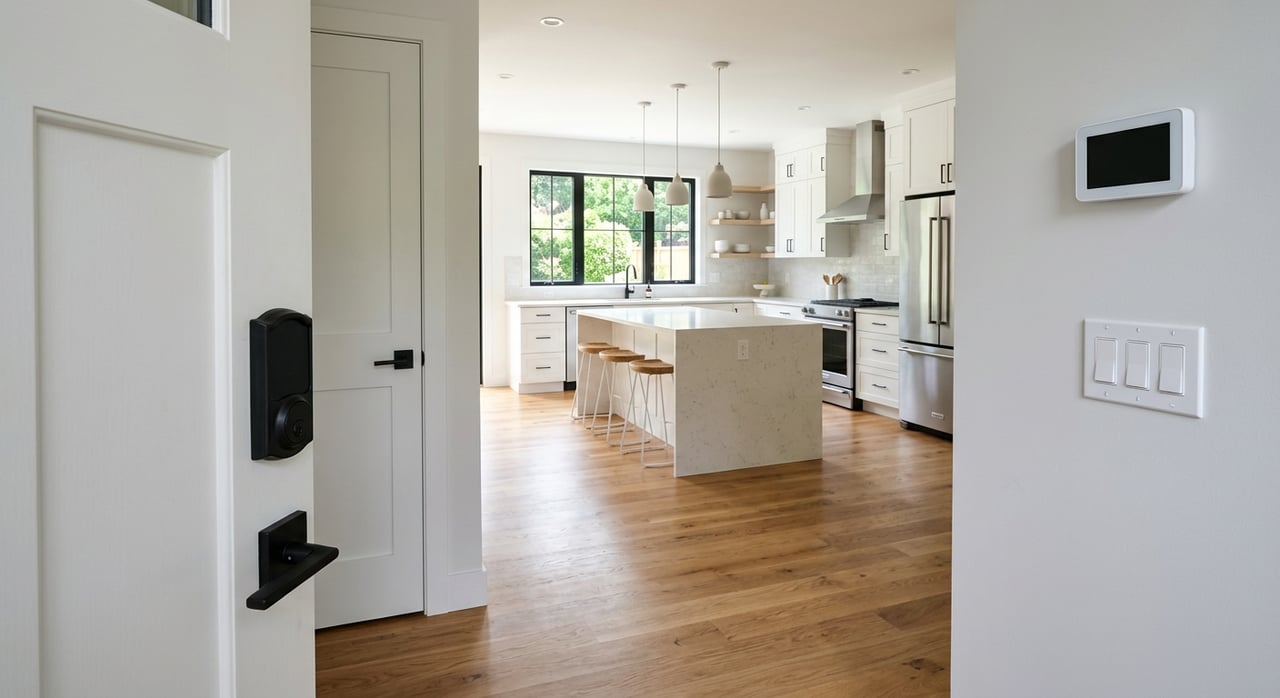
For many Collin County buyers, this interest shows up in a few practical ways. They often want to know whether a home has a smart lock, a video doorbell, or an alarm setup that is easy to learn and easy to transfer.
The key word is simple. Buyers tend to respond better to security features they can picture using right away rather than systems that seem hard to manage.
Smart locks
Smart locks are getting more attention from buyers. Zillow’s survey found that importance rose from 54% in 2024 to 60% in 2025.
That makes sense for everyday life. A smart lock can make it easier to manage deliveries, let in family members, or avoid the hassle of spare keys.
Doorbell cameras and visible monitoring
A doorbell camera is one of the most recognizable smart upgrades because buyers understand it immediately. It offers a clear mix of convenience and visibility without asking the buyer to learn a complex system.
If you are selling, this is the kind of feature that is easy to point out during showings. If you are buying, it is the kind of feature that can make a home feel more current from day one.
Comfort and energy upgrades matter too
After security, buyers often ask about features that help manage comfort and utility use. The National Association of Home Builders says buyers rank technologies like multi-zone HVAC, lighting controls, and programmable thermostats highly for efficiency.
These features tend to matter because they solve everyday problems. You are not just adding tech for the sake of tech. You are making it easier to keep the house comfortable and manage energy use.
Smart thermostats
A smart thermostat is one of the clearest examples of a useful upgrade. ENERGY STAR explains that certified smart thermostats can adjust heating and cooling automatically, can be controlled from a smartphone, and save about $50 per year on average, with some homes saving up to $100 annually.
There is also a resale signal here. Zillow’s 2026 analysis cited in the research found that mentioning a smart thermostat could help a home sell half a day faster, while a lower-cost programmable thermostat was associated with a 0.79% lower sale price in listing analysis.
That does not mean one device guarantees a result. It does suggest that buyers may view a true smart thermostat as a more modern and useful feature.
Smart lighting controls
Lighting controls are another upgrade buyers tend to understand quickly. According to NAHB’s consumer guidance, smart lighting can support efficiency, and ENERGY STAR notes that smart lighting can offer remote access, occupancy-based controls, and lower energy use in active and standby modes.
For buyers, the appeal is simple. Lights that can be automated or controlled remotely can feel convenient, practical, and modern without requiring a major remodel.
Water-saving features are increasingly relevant
Smart-home conversations are not only about energy and security. Water management is becoming a more important part of the discussion, especially when a feature can help prevent damage or reduce waste.
This is where leak detection and irrigation controls can add value. These upgrades may not be flashy, but they address problems homeowners want to avoid.
Leak detection devices
According to EPA WaterSense, leak detection and flow-monitoring devices can alert homeowners to unexpected dampness or unusual water use. That can help reduce waste and may help catch an issue before it becomes a more expensive repair.
For buyers, this type of feature can be reassuring because it shows a home has practical systems in place. For sellers, it is a smart example of an upgrade that protects the home while also being easy to explain.
Smart irrigation controllers
If a home has an irrigation system, a smart controller can be a meaningful plus. EPA WaterSense says WaterSense labeled controllers can save an average home up to 15,000 gallons of water each year by adjusting watering to weather or soil moisture instead of sticking to a fixed timer.
That is the type of feature buyers often appreciate because it ties directly to routine ownership. It is not about novelty. It is about making an existing home system work more efficiently.
EV charging is becoming a useful bonus
Electric vehicle charging is not yet the first thing every buyer asks about, but it is becoming more relevant. For buyers who already own an EV or expect to own one soon, charger readiness can be a real convenience.
The U.S. Department of Energy says Level 2 chargers provide faster charging, deliver about four times more miles per hour of charging than Level 1 equipment, and are roughly 10% more efficient.
What buyers often care about most is whether the hard part is already done. DOE also notes that Level 2 installation can involve permits, code requirements, and possible electrical upgrades, so a garage that is already set up for EV charging may stand out.
Which smart upgrades should come first?
If you are deciding where to spend money, start with the features buyers understand fastest and use most often. Based on the research provided, the most broadly relevant order is usually:
- Security and access
- Smart thermostat and lighting
- Leak detection
- EV charging readiness, if practical for the garage and electrical setup
That sequence lines up with Zillow’s buyer survey and NAHB’s efficiency guidance. It also reflects a simple principle: solve common daily needs first.
Simple systems often win over flashy ones
One of the biggest takeaways from national buyer data is that more devices do not automatically mean more value. Ease of use matters.
NAR’s CES 2026 technology coverage points out that buyers are more likely to embrace smart features when they are easy to understand, work well together, and do not create ongoing fees or app overload.
That is especially important if you are preparing a home for resale. A few visible, reliable upgrades can often be more appealing than a house packed with specialized products a buyer may not want to maintain.
Watch for subscription fatigue
Buyers may hesitate if every feature comes with a monthly fee or a separate app. Systems that feel straightforward and easy to transfer to the next owner tend to be easier to market.
If you are buying, ask which devices stay with the home and whether any subscriptions are optional. If you are selling, keep setup instructions organized and make the handoff as simple as possible.
Are smart-home features only for new homes?
No. Most of the features buyers ask about can be added to existing homes.
The research for this article notes that thermostats, lighting, locks, leak detection, irrigation controllers, and charger-ready garages are all relevant for resale homes, not just new construction. That is part of what makes smart upgrades so appealing in Collin County. You do not always need a full renovation to make a home feel more current.
What this means if you are buying or selling
If you are buying in Collin County, smart-home features can help you compare homes beyond surface-level finishes. A home with practical upgrades may offer a smoother day-to-day experience, lower waste, and fewer projects after move-in.
If you are selling, the goal is not to install every available device. It is to focus on features that buyers recognize, value, and can picture using right away.
In today’s market, the strongest smart-home upgrades are usually the ones that make your life easier. If you want help evaluating which features may matter most for your home search or your resale strategy in Collin County, Clinton Asalu offers the kind of education-first guidance that helps you make confident next steps.
FAQs
What smart-home features are Collin County buyers asking about most?
- Buyers most often ask about security features like smart locks and doorbell cameras, along with smart thermostats, lighting controls, leak detection, irrigation controllers, and EV charger readiness.
Do smart thermostats help resale in Collin County?
- Research cited in this article shows that mentioning a smart thermostat can help a home sell faster in listing analysis, and buyers also value the comfort and potential energy savings these devices can offer.
Are smart-home upgrades worth adding before selling a Collin County home?
- They can be worthwhile when they solve everyday problems clearly and simply, especially security, thermostat, lighting, and leak detection upgrades that buyers understand quickly.
Do smart-home features in Collin County need subscriptions?
- Some do, but buyers tend to prefer systems that work well without ongoing fees or complicated app setups.
Can older homes in Collin County have smart-home features added?
- Yes. Many of the most requested features, including thermostats, lighting, locks, leak detection devices, and some EV charging setups, can be added to existing homes.
Does EV charging matter to homebuyers in Collin County?
- It can matter, especially for buyers who already own an electric vehicle or want a garage that is ready for a future Level 2 charger installation.